4CZNZ Reasoning Infrastructure

The gap is the reasoning layer.

AI systems are trained on text. Real deployment requires judgement under noise, uncertainty, constraints, and adversarial pressure.

PLC Mechanical Gambling Game Theory Fraud
Output

Structured signal. Low noise. High clarity. Intent captured.

State Engine

State-driven reasoning behaviour.

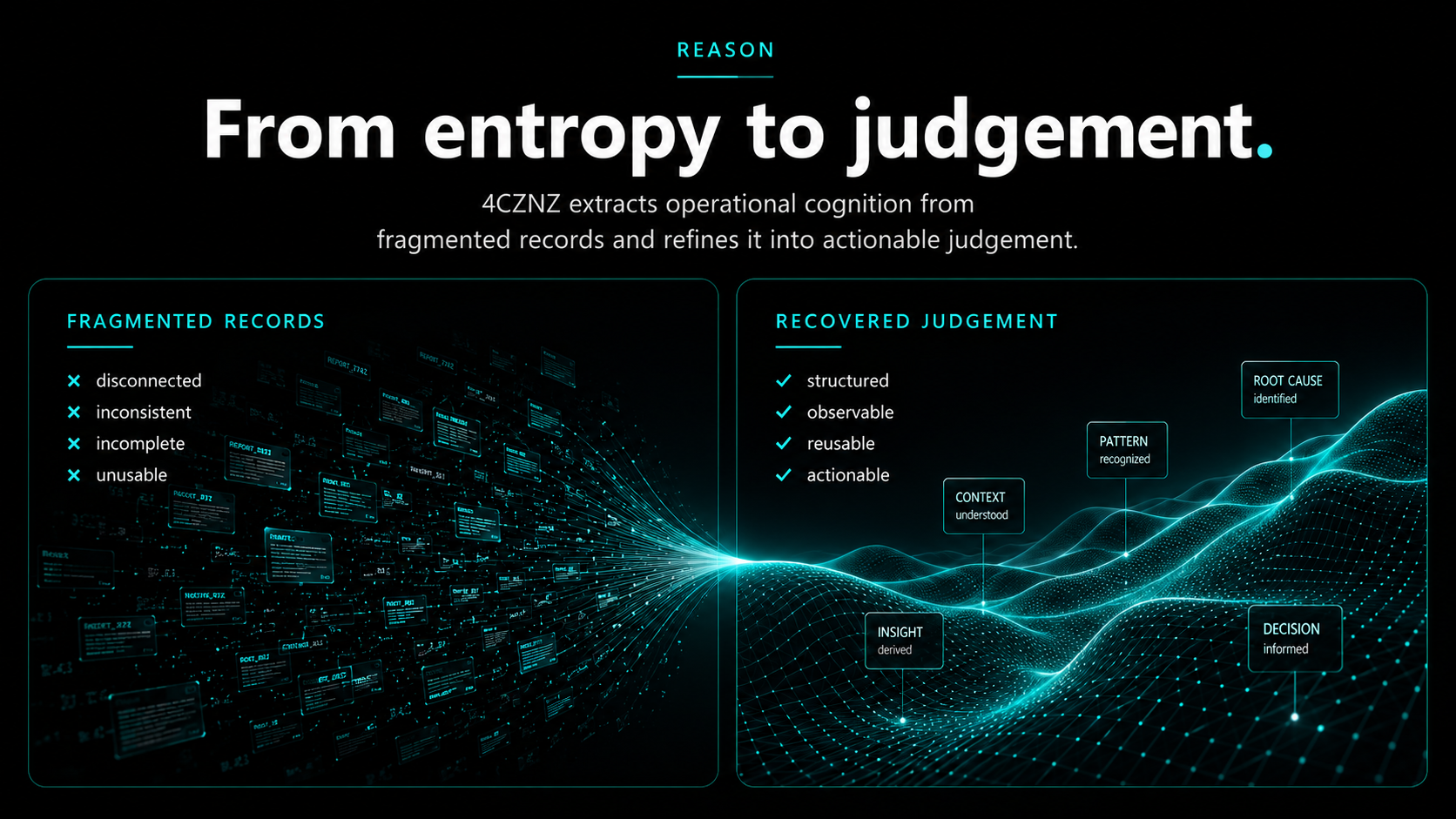
Every interaction on the site follows the same logic as the product: entropy enters, signal converges, and the output resolves into action.

01 / Active

Entropy

Multiple signals, high noise, unstable paths, and incomplete context.

02 / Filtering

Converging

Signals are mapped, evaluated, compressed, and structured.

03 / Directed

Resolved

Clean output is routed into a decision, evaluation, or model workflow.

System Flow

4CZNZ structures the reasoning layer.

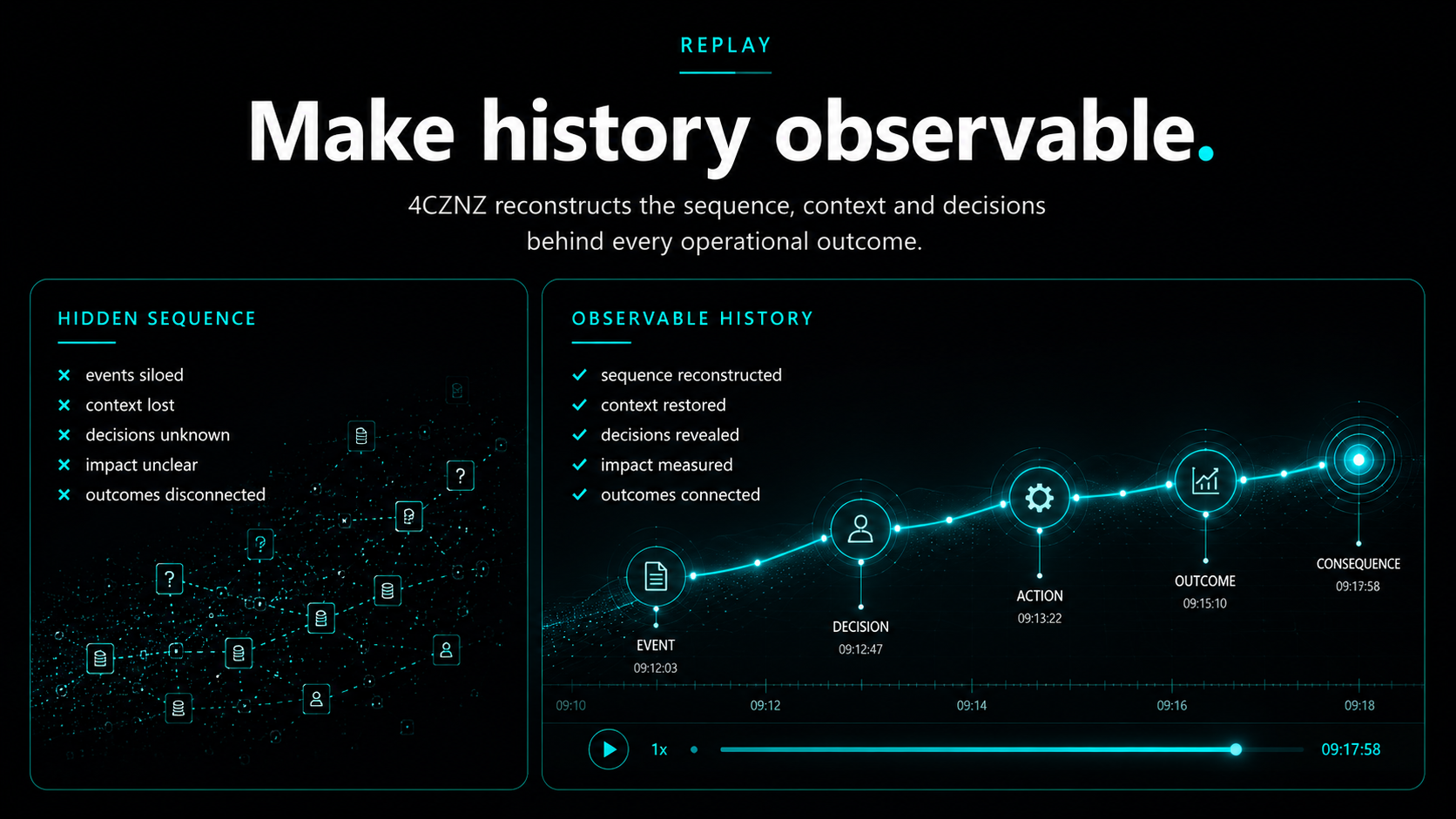
We extract real-world reasoning traces from high-signal human environments, refine them into structured JSONL corpora, and package them for model training, evaluation, and decision-system development.

01

Corpora

Domain-specific reasoning datasets built from real-world problem-solving environments.

02

Substrate

Interactive reasoning maps that turn signal into navigable decision structure.

03

Sandbox

Evaluation environments that expose behaviour under uncertainty, constraint, and pressure.

Interaction Model

Do not just read the claim. Test the behaviour.

The 4CZNZ Sandbox is the proof layer. It lets buyers experience how reasoning changes when systems move from surface prediction to structured judgement.

Previous Route
Active Route
Next Route
Reasoning Stacks

Five stacks for real-world AI failure modes.

Each stack targets a different type of reasoning pressure: deterministic logic, physical constraint, uncertainty, strategy, and adversarial behaviour.

Behaviour Shift

Better reasoning creates better decisions.

Use the controls or hover either side to shift the reasoning state.

Without 4CZNZ

Brittle
Shallow
Overconfident
Context-poor
reasoning layer

With 4CZNZ

Structured
Adaptive
Uncertainty-aware
Adversarially aware
Access Model

Start with evaluation. Scale into licensing.

The commercial path is deliberately simple: validate the signal, qualify the use case, then structure access around the buyer’s model-development workflow.

Tier 01

Evaluation

£500–£2,000

Short-term access for signal review and internal validation.

Tier 02

Single Stack

From £5,000

Full domain access for internal model training and development.

Tier 03

Multi-Stack

Custom

Cross-domain reasoning coverage across logic, constraint, uncertainty, and pressure.

Tier 04

Design Partner

Custom

Early collaboration around corpora, substrate, sandbox, and integration needs.

Train systems that reason.

Start with evaluation. Move to full system integration.